




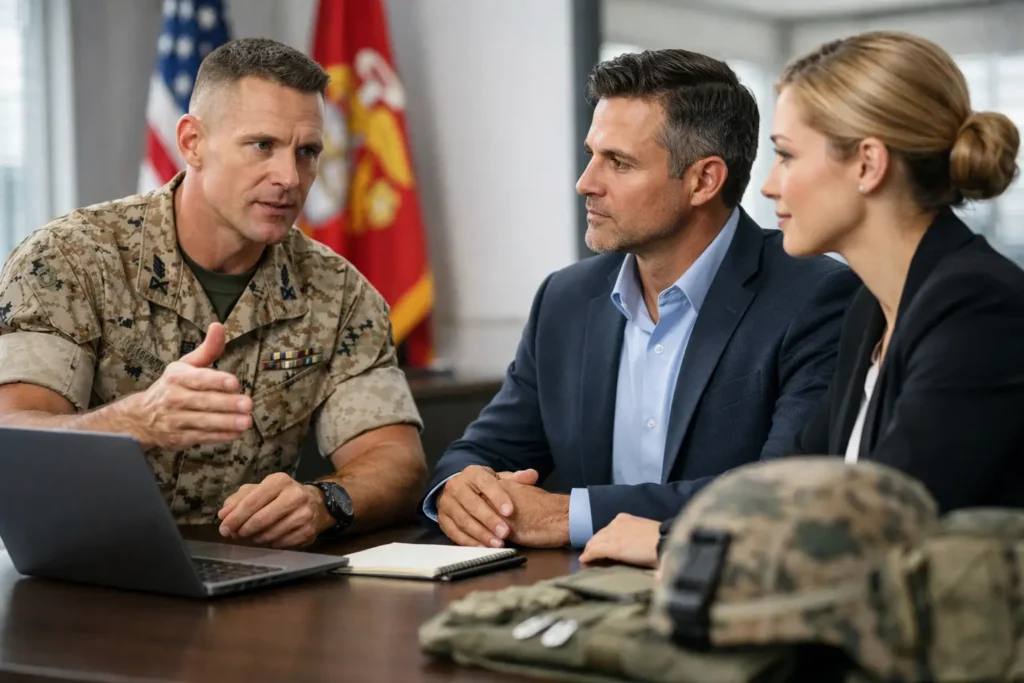
Most founders do not fail because they lack ideas. They fail because the moment pressure hits, they get vague, emotional, and inconsistent. That is where marine corps leadership lessons entrepreneurs can actually use start to matter. Not as a branding gimmick. Not as chest-thumping. As a standard for how you carry responsibility when people, money, and reputation are on the line.
I learned that lesson the hard way.
The Marine Corps did not teach me to sound tough. It taught me that leadership gets exposed under stress. Anybody can talk about vision when revenue is up, the team is happy, and the market is forgiving. The real test comes when a key employee quits, a client walks, cash gets tight, and everybody looks at you for direction. In those moments, your habits tell the truth long before your words do.
That is why I still come back to the same leadership principles after years in business. They are not trendy. They are not soft. And they do not care how smart you think you are.
Marine Corps leadership lessons entrepreneurs usually resist
The first lesson is simple – the mission comes before your mood.
A lot of entrepreneurs say they want freedom, but what they really want is to operate without constraint. That is not leadership. That is self-indulgence wearing a nice blazer. In the Corps, your feelings did not get a vote on whether the mission mattered. In business, the mission should still be bigger than your mood swings, your ego, and your need to be the smartest person in the room.
That does not mean ignoring your humanity. It means not making the business pay for your lack of discipline. If your team never knows which version of you is showing up, they stop trusting your leadership. They may still work for you, but they stop following you.
The second lesson is that clarity beats charisma.
I have seen founders try to inspire people with big speeches when what the team really needed was a clear objective, a defined standard, and a decision. The Marine Corps taught me that confusion is expensive. In business, it costs time, margin, morale, and momentum. If your people keep missing the mark, there is a decent chance they are not lazy. You may have been unclear.
Charisma can get attention. Clarity gets execution.
The third lesson is that accountability starts with the leader.
This is where a lot of business owners want to point at the team, the economy, the leads, the clients, or the market. Sometimes those things are real constraints. I am not naive about that. But even when external conditions are bad, the leader still owns the response. You may not be the cause of every problem. You are still responsible for what happens next.
That mindset changes everything. It takes you out of victim language and puts you back in command.
What the Corps taught me about leading people who are tired
One of the biggest lies in entrepreneurship is that people need more motivation. Most of the time, they need more trust and less nonsense.
In the military, people can endure a lot when they believe the person leading them is competent, honest, and willing to carry weight. That applies in business too. Teams do not expect perfection. They do expect consistency. They want to know whether you mean what you say, whether you will make the hard call, and whether standards apply to you too.
That last part matters.
Nothing breaks a team faster than a founder who preaches discipline and lives in excuses. If you want buy-in, your behavior has to match the standard you expect. If you want ownership, stop protecting yourself from the same accountability you demand from everyone else.
This is one reason I have little patience for performative leadership. Saying the right things in public does not count for much if your private habits are weak. Your team knows. Your spouse knows. You know.
Leadership is not built in the announcement. It is built in repetition.
Marine Corps leadership lessons entrepreneurs can apply without acting like Marines
Let me be clear about something. I am not saying every entrepreneur needs to run their company like a military unit. That would be lazy thinking.
The private sector is different. Creative work is different. Startups move differently than platoons. Some businesses need more experimentation, more flexibility, and a looser communication style. That is real. But the deeper principles still hold.
People still need a mission they understand.
Standards still need to be clear.
Leaders still need to make decisions with incomplete information.
Trust still gets built through competence and consistency.
And when things go sideways, somebody still has to take responsibility instead of hiding behind process, personality assessments, or trendy leadership language.
That is where many founders get stuck. They adopt the aesthetics of leadership without accepting the burden of it. They want influence without discipline. Authority without sacrifice. Results without standards. It does not work.
The best entrepreneurs I know are not always loud. They are not always polished either. But they are reliable under pressure. Their people know where they stand. Their clients know what to expect. Their companies do not rise and fall based on the leader’s emotional weather.
That kind of steadiness is not accidental. It gets earned.
The leadership mistake that follows veterans into business
Now let me give you the other side, because this is where nuance matters.
Military experience can help a founder a lot, but it can also create blind spots. One of the biggest is assuming that command presence automatically translates into business leadership. It does not.
In the Corps, rank can force compliance. In business, talent has options. Customers have options too. If you lead civilians the same way you led junior Marines, you will burn people out or push away strong operators who could have helped you build something real.
So the lesson is not to copy military structure. The lesson is to carry military standards into a different environment with maturity. Sometimes that means being more collaborative than you want to be. Sometimes it means slowing down long enough to explain the why. Sometimes it means recognizing that what worked in one system will fail in another.
Discipline is transferable. Rigidity is not.
I have had to learn that in my own life. There were seasons when intensity served me well and seasons when it became a liability. Good leadership requires calibration. The standard stays high, but the method has to fit the mission and the people in front of you.
Why entrepreneurs need standards more than inspiration
Here is the truth most people do not want to hear. Your business is probably not suffering from a motivation problem. It is suffering from a standards problem.
When standards are low, everything gets personal. Every missed deadline becomes a drama. Every tough conversation feels awkward. Every underperforming system turns into a debate. Leaders get tired because they are re-deciding what should have been settled already.
The Corps cured me of that fast. Standards reduce friction. They create speed. They remove a lot of emotional waste from decision-making because people know what good looks like.
That does not mean becoming robotic. It means being serious about the basics. What does done mean in your company? What does ownership mean? What happens when somebody misses the mark? What does communication look like when the pressure is on?
If you cannot answer those questions clearly, you are leading on vibes.
And vibes are a terrible operating system.
For me, this became the foundation of how I think about founder accountability. Not shame. Not theater. Not fake hustle. Just the disciplined choice to tell the truth, face the gap, and raise the standard. That is a big part of the philosophy behind TUFF LOVE, and it matters because most people do not need more coddling. They need a clearer mirror.
What these lessons really ask of you
The best Marine Corps leadership lessons are not about aggression. They are about responsibility.
Can you stay clear when things get noisy?
Can you make a call without waiting for perfect certainty?
Can you hold the line on standards without turning into a tyrant?
Can you own your part before blaming the market, your team, or your past?
If you can, you do not just become a stronger entrepreneur. You become the kind of leader people can trust when the room gets tense.
That is what matters.
Not the slogan. Not the image. Not whether you can sound disciplined on social media.
What matters is whether the people depending on you get your best when conditions are bad. Because that is when leadership stops being a concept and becomes a cost.
And if you are building something that matters, that cost is part of the job. The question is whether you are willing to pay it.